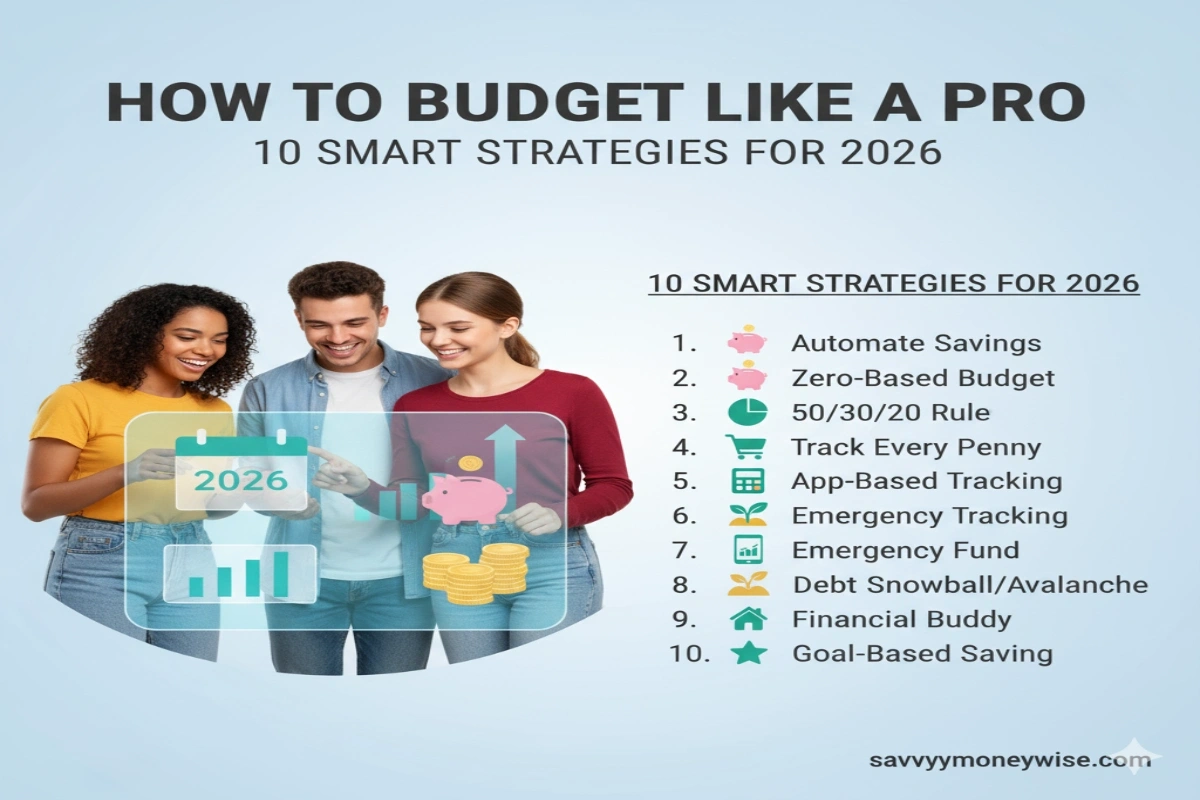
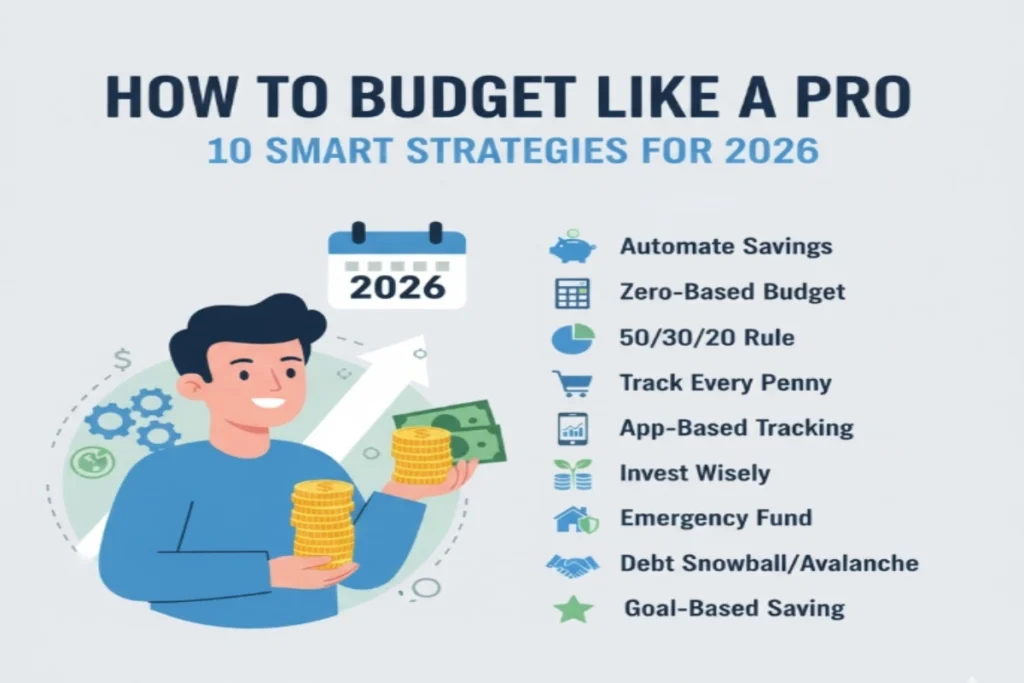
How to Budget Like a Pro: 10 Smart Strategies for 2026
Hey there! Let’s talk about money, but don’t worry—I won’t make it boring. Budgeting often sounds like a chore, but if you do it right, it’s more like having a roadmap to financial freedom. In 2026, whether you’re managing your own household or running a small business, budgeting smartly can be the difference between stress and peace of mind.
In this guide, I’ll walk you through 10 practical strategies to budget like a pro. We’ll cover both personal and professional finances, so by the end, you’ll have a clear plan to save, spend wisely, and plan for the future.
Table of Contents
- 1. Set Clear Financial Goals
- 2. Track Every Dollar
- 3. Create a Realistic Budget
- 4. Reduce Unnecessary Expenses
- 5. Build an Emergency Fund
- 6. Automate Savings & Payments
- 7. Plan for Taxes & Retirement
- 8. Use Budgeting Tools & Apps
- 9. Review & Adjust Regularly
- 10. Integrate Personal & Professional Finances
- Conclusion
1. Set Clear Financial Goals
Before you can even think about saving or spending wisely, you need to know what you’re aiming for. Setting financial goals is like drawing a map before going on a road trip—you wouldn’t just drive blindly, right?
Personal Goals
Start with the basics: short-term, medium-term, and long-term goals. Short-term goals could be paying off credit card debt or saving for a weekend getaway. Medium-term might be buying a car, renovating your kitchen, or funding a course to upgrade your skills. Long-term goals are your big dreams—think home ownership, retirement, or starting your own business.
Professional Goals
For business owners or freelancers, goals are just as important. Set revenue targets, decide how much to reinvest into your business, and plan for taxes and unexpected expenses. These goals keep your business on track and prevent last-minute panic when bills are due.
Pro Tip: Use SMART goals—Specific, Measurable, Achievable, Relevant, and Time-bound. For example, instead of “save money,” say “save $2000 in six months for an emergency fund.”

2. Track Every Dollar
You cannot control what you don’t measure. Tracking every dollar you earn and spend is the secret sauce of effective budgeting. This might sound tedious, but I promise it’s worth it.
Personal Tracking
Start by logging your income, bills, subscriptions, groceries, entertainment, and anything else. Over a month or two, patterns emerge—you see where your money leaks out. Apps like YNAB, Mint, or PocketGuard make this much easier. You’ll be surprised how much money you can save by simply knowing where it’s going.
Professional Tracking
For business, tracking is even more critical. Know your revenue streams, recurring expenses, and one-time costs. Categorize them into fixed costs, variable costs, and discretionary spending. A simple spreadsheet can do the trick, or you can use software like QuickBooks or Zoho Books.
Pro Tip: Review your spending weekly. Small adjustments add up quickly.

3. Create a Realistic Budget
A budget isn’t meant to restrict you—it’s a plan for your money. The trick is to make it realistic and flexible. If your budget is too strict, you’ll abandon it by the second week.
Personal Budget
A popular approach is the 50/30/20 rule: 50% of your income goes to needs, 30% to wants, and 20% to savings or debt repayment. But remember, adjust these percentages to fit your lifestyle. If rent has eaten up 60% of your income, you need to tweak other categories accordingly.
Professional Budget
Forecast your business income and expenses for 6–12 months. Include contingency funds for emergencies. Track which projects are profitable and which aren’t. This helps you make better decisions on where to invest your time and money.
Pro Tip: Review your budget quarterly, not just annually. Life and business needs change, and your budget should reflect that.

4. Reduce Unnecessary Expenses
This is where you get creative. Reducing expenses doesn’t mean giving up all fun. It’s about finding smarter alternatives.
Personal Expenses
Audit subscriptions, cut impulse purchases, cook at home more often, and use public transport. Even small changes like switching to a cheaper coffee brand or canceling unused streaming services can free up a lot over time.
Professional Expenses
Negotiate vendor contracts, focus on high-ROI marketing, and cut tools or subscriptions that you don’t actively use. Every dollar saved here can be reinvested into growth or your own salary.
Pro Tip: Track your “small wins.” They may seem insignificant daily but add up to a substantial amount annually.

5. Build an Emergency Fund
Life throws curveballs. That’s why an emergency fund is non-negotiable. It gives you peace of mind and prevents debt when unexpected expenses arise.
Personal Fund
Aim for 3–6 months of living expenses in a separate account. This should cover rent, groceries, bills, and minimum debt payments.
Professional Fund
For a small business, keep 1–3 months of operating costs aside. This protects you from client payment delays, equipment failure, or seasonal downturns.
Pro Tip: Treat this fund like untouchable treasure unless it’s a real emergency.

6. Automate Savings & Payments
Automation removes friction and helps you stay consistent. Set up recurring transfers for savings and bills so you don’t have to think about it every month.
Personal Automation
Automate transfers to savings, retirement accounts, or investments. Schedule automatic bill payments to avoid late fees.
Professional Automation
Automate invoicing, recurring expenses, and even tax payments. Tools like QuickBooks, FreshBooks, and Wave can save hours of administrative work every month.
Pro Tip: Once you automate, check periodically to ensure everything is aligned with your goals.

7. Plan for Taxes & Retirement
Taxes and retirement might seem far away, but planning early can save you a lot of headaches later. Think of it as planting seeds today so you can enjoy shade tomorrow.
Personal Planning
Start by understanding your tax brackets and deductions. Contribute to retirement accounts like 401(k), IRA, or local equivalents. Even small monthly contributions compound over time. If you treat this like a mandatory bill instead of optional saving, it becomes much easier to stick to.
Professional Planning
For business owners, set aside a percentage of income for taxes, because surprises can sink a business fast. Also, consider retirement plans for yourself and employees if applicable. Not only does this ensure future security, but it can also improve morale if you have a team.
Pro Tip: Review your tax and retirement plan annually to make sure it aligns with your income, goals, and any law changes.

8. Use Budgeting Tools & Apps
In 2026, we have a ton of digital tools to make life easier. Think of them as your financial sidekicks—they remind you, track you, and sometimes even suggest smarter decisions.
Personal Tools
Apps like Mint, YNAB, PocketGuard, and GoodBudget can help you categorize expenses, track goals, and see trends. The best part is you don’t have to manually add every transaction; most apps sync with your bank automatically.
Professional Tools
Businesses can use QuickBooks, FreshBooks, Xero, or Zoho Books for invoicing, expense tracking, and cash flow management. Many of these apps even generate reports for taxes and performance reviews, saving hours of tedious work.
Pro Tip: Pick one tool for personal finances and one for business. Avoid juggling too many apps—it gets confusing fast.

9. Review & Adjust Regularly
Your budget is not set in stone. Life changes, business changes, and your goals might change too. Regular review keeps you on track and prevents nasty surprises.
Personal Review
Set aside time monthly to review your income and spending. Did you overspend in one category? Did you save more than expected? Adjust your allocations and celebrate wins. This is also a good time to revisit goals and see if priorities have shifted.
Professional Review
Quarterly reviews work well for small businesses. Compare your forecasted income and expenses with actual numbers. Identify trends—maybe a client’s project is more profitable than another, or certain subscriptions are underused. Then adjust your strategy accordingly.
Pro Tip: Treat your budget as a living document. Flexibility is not weakness—it’s smart management.

10. Integrate Personal & Professional Finances Wisely
Many freelancers, solopreneurs, or small business owners struggle to separate personal and business finances. Blending them smartly leads to better overall financial health.
Separate Accounts for Clarity
Keep a personal bank account and a business account. This helps track business expenses for taxes and makes it clear how much is truly profit.
Smart Integration
Use part of your business profit to fund personal goals like savings, investments, or retirement. Freelancers can allocate a percentage of revenue for personal use and the rest for business reinvestment. The key is maintaining balance without mixing them haphazardly.
Practical Example
Imagine you run a small online shop. Every month, you deposit 70% of your profit back into the business for supplies, marketing, and contingency. The remaining 30% goes to your personal account for bills, fun, and savings. You can adjust percentages as needed, but this approach keeps both worlds organized.
Pro Tip: Review the integration every quarter to ensure personal withdrawals don’t impact business growth and vice versa.

Conclusion
Mastering budgeting in 2026 isn’t about restriction or living a boring life. It’s about control, foresight, and confidence. By implementing these 10 strategies, you can:
- Gain control over personal and professional finances
- Save consistently while reducing unnecessary expenses
- Plan for emergencies, taxes, and retirement without stress
- Build long-term financial stability and peace of mind
- Enjoy life more knowing your finances are aligned with your goals
Remember, budgeting is not punishment—it’s empowerment. Start today, track consistently, adjust when needed, and integrate your personal and professional finances wisely. By the end of 2026, you’ll look back and wonder how you ever managed without a clear plan.
So grab your notebook or your favorite budgeting app, make a plan, and take control. Financial freedom in 2026 is not a dream—it’s a choice, and you’re ready to make it happen!

Leave a Reply